Øystein Wyller Odden
Lyset blinker
The Skylight Room
26.02.–12.04.2026
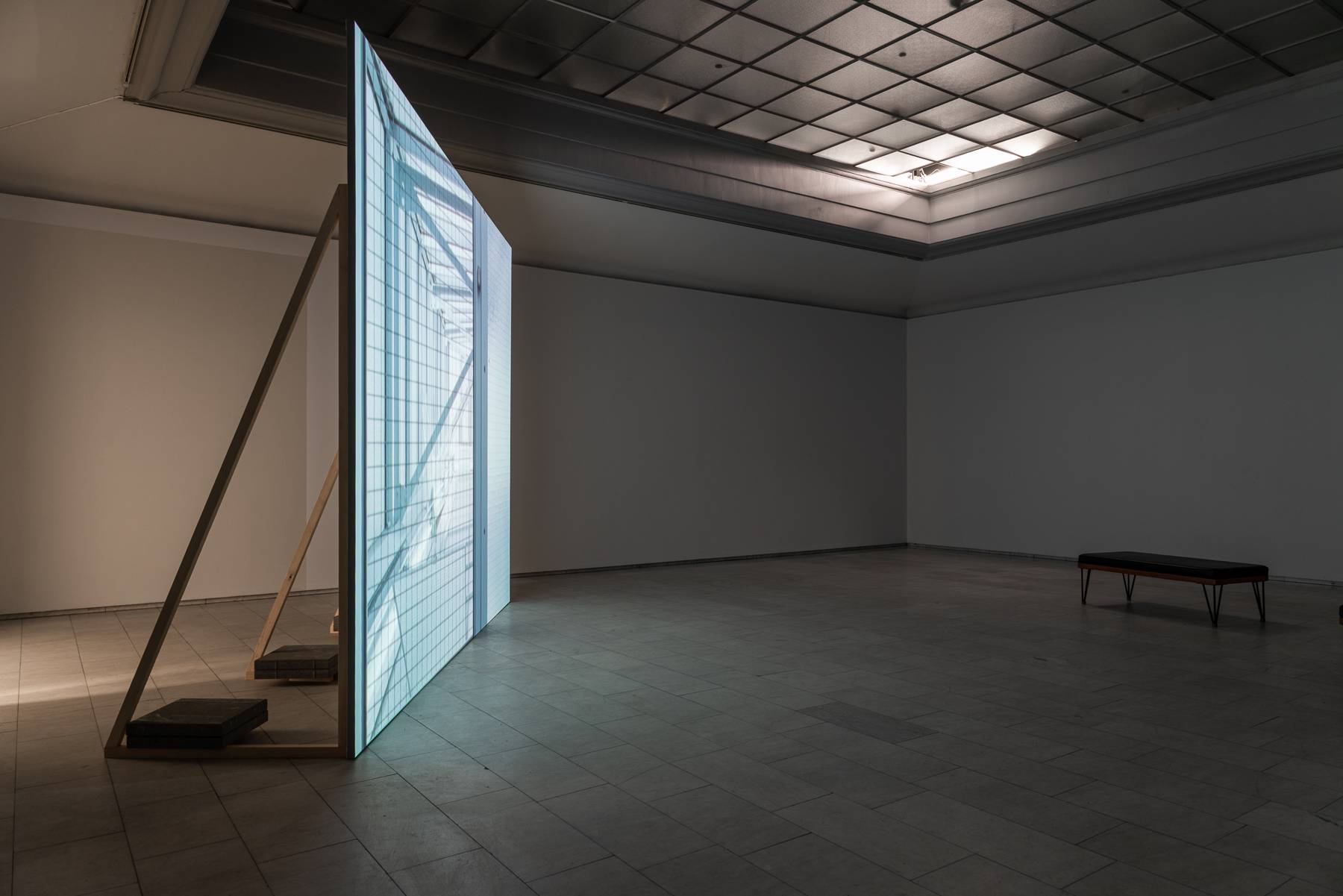
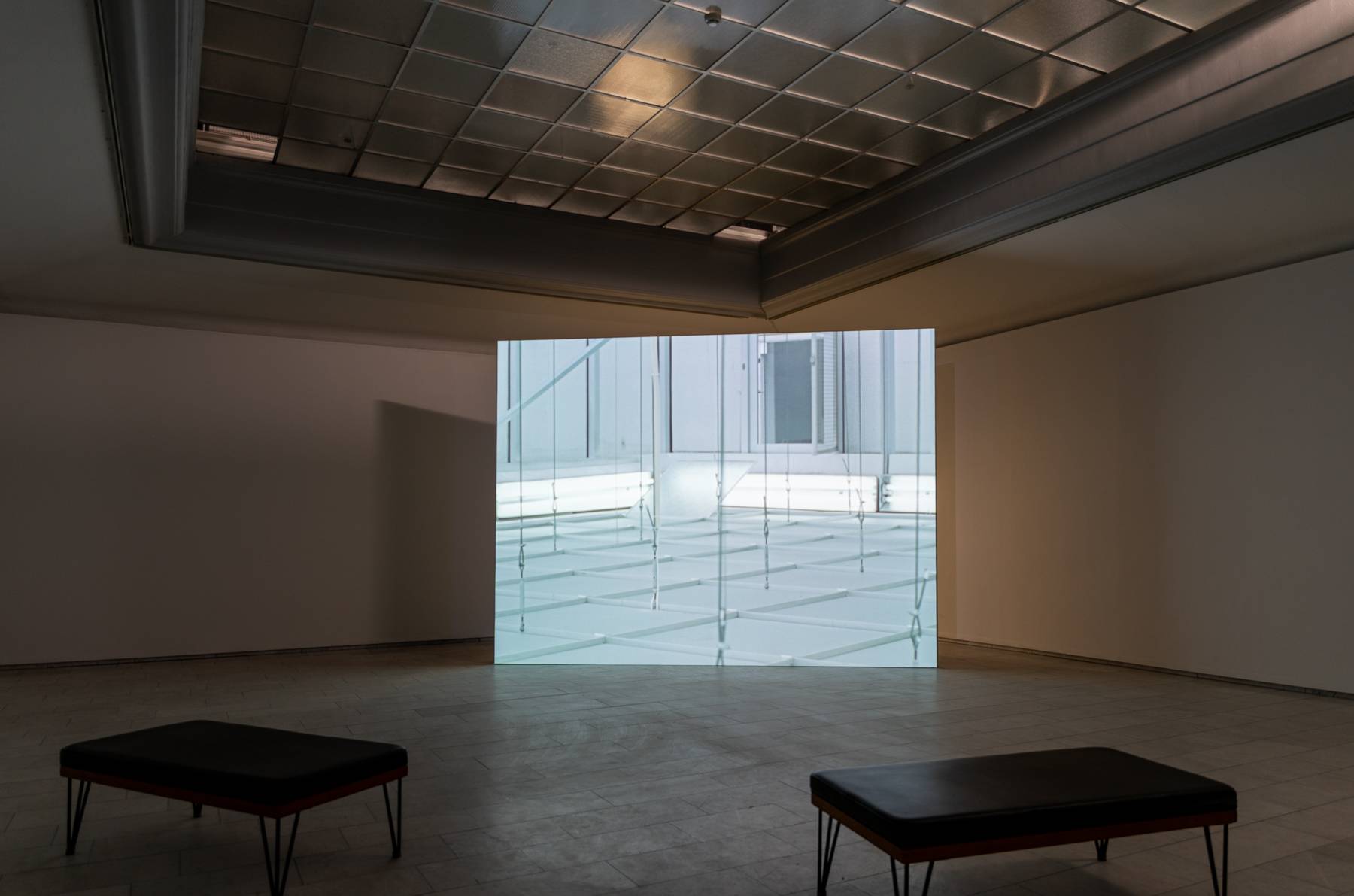
The installation Lyset blinker is a portrait of The Skylight Room—Overlyssalen—in Kunstnerforbundet. Using sound and image, Øystein Wyller Odden examines the imprints left in the skylight room after 107 years and more than 1,500 exhibitions featuring the work of around 2,000 artists.
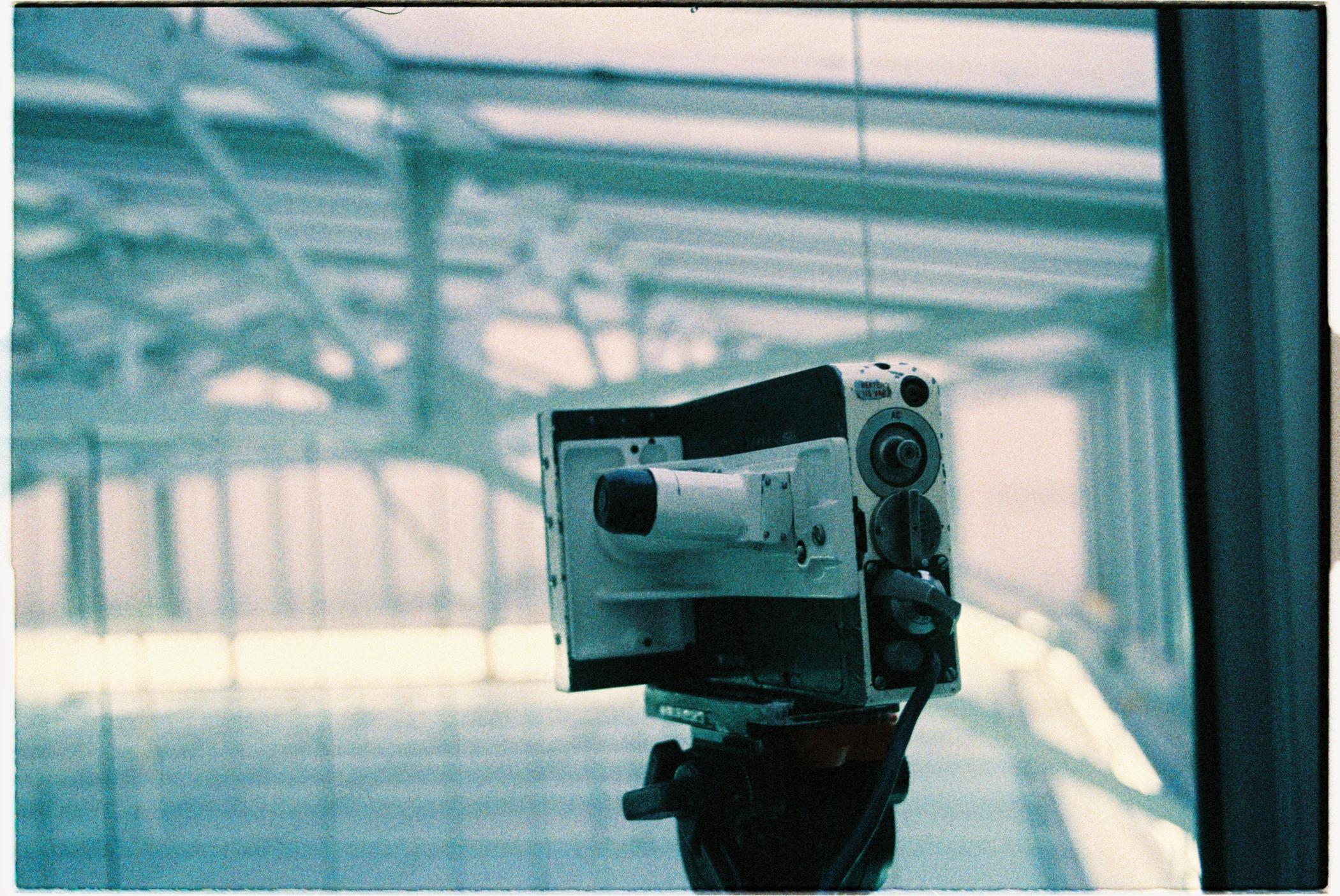
The video work Lyset blinker (‘The Light Flickers’) depicts the room’s architecture, infrastructure, and marks of use. It is recorded on analogue 16mm film with a range of high-speed cameras, including models designed for analysing airbag tests and rocket launches. These cameras capture a phenomenon invisible to the human eye: the flicker of the room’s lighting, occurring faster than we can perceive. This limitation of our perceptual apparatus is, among other things, what makes the medium of film possible—still images in rapid succession fusing into moving pictures.
The sound installation De dominerende frekvensene i Overlyssalen (‘The Dominating Frequencies in Overlyssalen’) is based on analyses of nighttime audio recordings of the silence of the space. Using vibration speakers, Wyller Odden turns the ceiling structure of the room into a musical instrument that plays one large chord composed from the most prominent tones found in the recordings.
Øystein Wyller Odden (b. 1983, Notodden) works with installations and compositions, often using sound and music as central elements. His practice addresses the relationship between technology, institutions, and humans, seeking to investigate and expose the underlying structures within this material. Wyller Odden has previously held solo exhibitions at, among others, Atelier Nord (2024), Trøndelag Centre for Contemporary Art (2023), Telemark Art Center (2018), Kunstnerforbundet (2018), and Fotogalleriet (2011). He has also participated in group exhibitions at, among others, the Oslo Biennial, Henie Onstad Art Center, the Drawing Biennial, Oslo, and Leopold-Hoesch-Museum in Germany.
The artist would like to thank Hanne Grieg Hermansen, Kunstnerforbundet, Audun Røsten, Kunstnernes Hus for lending equipment, Sindre Hustveit, Hans Kristian Borchgrevink Hansen, Vebjørn Guttormsgaard Møllberg, Nitja, Notam, Janne Lindgren, Ellen Grieg, Kurt Hermansen, and Ursula Wyller.
The exhibition is supported by the Arts Council Norway, City of Oslo, Art Centers of Norway, and Norwegian Visual Artists' Fund.
The Light Flickers
The light in the ceiling flickers. The electric current pulses back and forth through the fluorescent tubes like a piston, fifty times per second. Each time the current crosses zero, the light goes out. The light in the ceiling flickers a hundred times per second.
The fluorescent material is apparently a mixture of noble gas and mercury vapour. When electricity is applied, it becomes a plasma that emits invisible ultraviolet light. This causes a phosphor coating on the inside of the fluorescent tubes to glow within the visible part of the electromagnetic spectrum. They shine.
People have different thresholds for how fast a light must flicker before it merges into the experience of continuous light. No one consciously perceives lights like these flickers, but some are clearly affected by them. This can be inferred from symptoms such as headaches, and reduced performance, symptoms that do not appear in rooms lit by other types of lighting.
It is said that the electrical frequency of fifty cycles per second was once chosen as a compromise between machines and the human body. Early electromotor technology required a low frequency, but if it drops much below fifty hertz, the flicker becomes visible.
This flickering is what we, cinematographers Marte Vold and Fred Arne Wergeland, and myself, have recorded on 16mm film. We used several kinds of high-speed cameras, including models originally developed for analyzing rocket launches and airbag tests.
I have also attempted to portray this room in moving images and sound. The sound was created approximately as follows; one night in July last year, the sound engineer Audun Røsten and I did a multi-channel sound recording of the silence of the room. I then analysed the recordings and identified the most dominant frequencies—tones—in the silence. Using vibration speakers, I turned the skylight structure into a musical instrument that plays one large chord into the room.
This room, the Overlyssalen (the Skylight Hall) at Kunstnerforbundet in Oslo, Among Norwegian artists, the name of the hall is often pronounced in a way that subtly embeds the word «selveste» (‘the very’). The room has natural skylight as well as the aforementioned artificial lights, used in evenings and darker seasons. The hall was built in 1919 because Kunstnerforbundet needed more space with good lighting. This was possible partly because they could afford it.
They could afford it because they sold art. In the year before the Overlyssalen opened, Kunstnerforbundet sold art worth what corresponds to NOK 13 million today. «The direction has been positive and the pace exceptional», as one newspaper wrote in 1918.
Then as now, there was war in Europe, and then as now, Norway was a country in the world where circumstances were favourable. «The war period brought our art dealers a turnover they could hardly have dreamed of,» wrote the pseudonym «Vanderen» (The Wanderer) under the headline «Stor Utstilling av fransk kunst i Kunstnerforbundet» (Large Exhibition of French Art at Kunstnerforbundet).
Shipping continued across the world oceans, goods travelled from A to B, somebody organised the transports, and somebody owned the ships. Among the ship brokers and ship owners were many Norwegians, and many of these bought art works here at Kunstnerforbundet for their homes and offices.
There was also, then as now, money to be made from extracting and selling oil. At that time, unlike today, the oil came from the world’s largest mammal, hunted in the waters around Antarctica and turned into profit, among other places in Norway, and particularly in Sandefjord. «We have (...) sent painting after painting to Sandefjord. They buy when times are good, and few follow the prospects for the whaling industry with as much interest as I do,» said the former director at Kunstnerforbundet, Kitty Kamstrup to a newspaper in 1918. She continues, «All in all, I believe people are beginning to keep up and realize that art also has a task for them, understanding that ‘a thing of beauty is a joy forever.’»
The first exhibition in this room was by Oluf Wold-Torne in March 1919. When it opened, the artist himself lay in sickbed, and he died a few days later from the influenza pandemic of the time. Since then, more than 1500 exhibitions have taken place in this room. If I have counted correctly, this is exhibition number 1636. Welcome.
Øystein Wyller Odden, February 2026
(Translated by Kunstnerforbundet)