Sofia Eliasson
Shared Breath
The Cabinet
26.02.–12.04.2026
Sofia Eliasson presents two new series, Karbonvokter and Huldras døtre in The Cabinet. Eliasson is concerned with how humanity is connected with nature. She directs her attention toward the earth’s surface and what is hidden underground. The layers of the earth’s crust contain both the history of humankind and the time beyond. By combining imagery, materials and techniques from different historical periods, the exhibition Shared Breath reflects on evolution, transformation, the cycles of nature and possible forms of life.
All life on Earth has developed from the plant kingdom, and we humans are completely dependent on the ecological cycles and our relation with plants. Through photosynthesis, plants transform water, sunlight and carbon dioxide—our breath—into glucose and oxygen, a shared breath between plants and humans. They create the atmosphere that all other living species breathe in and out.
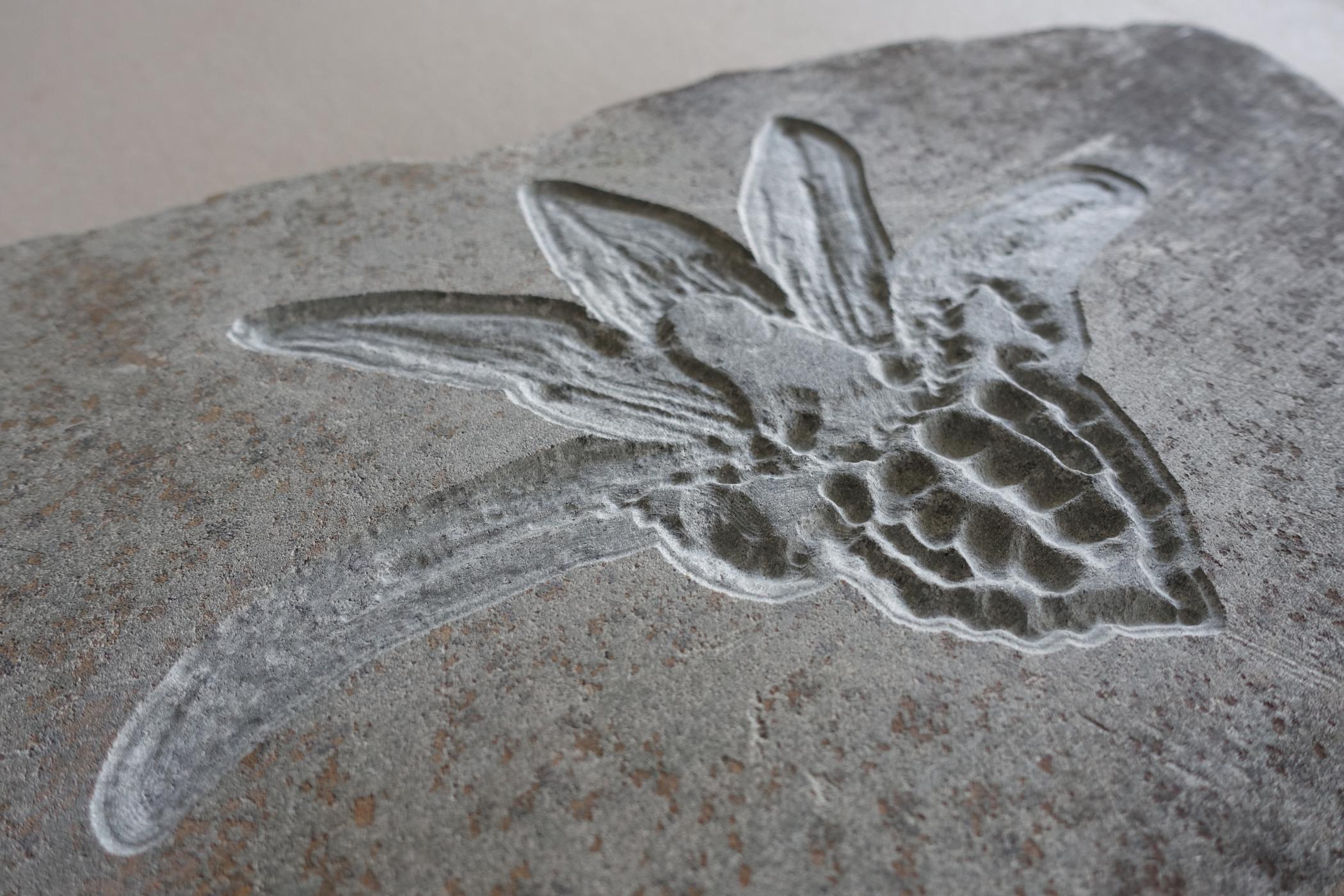
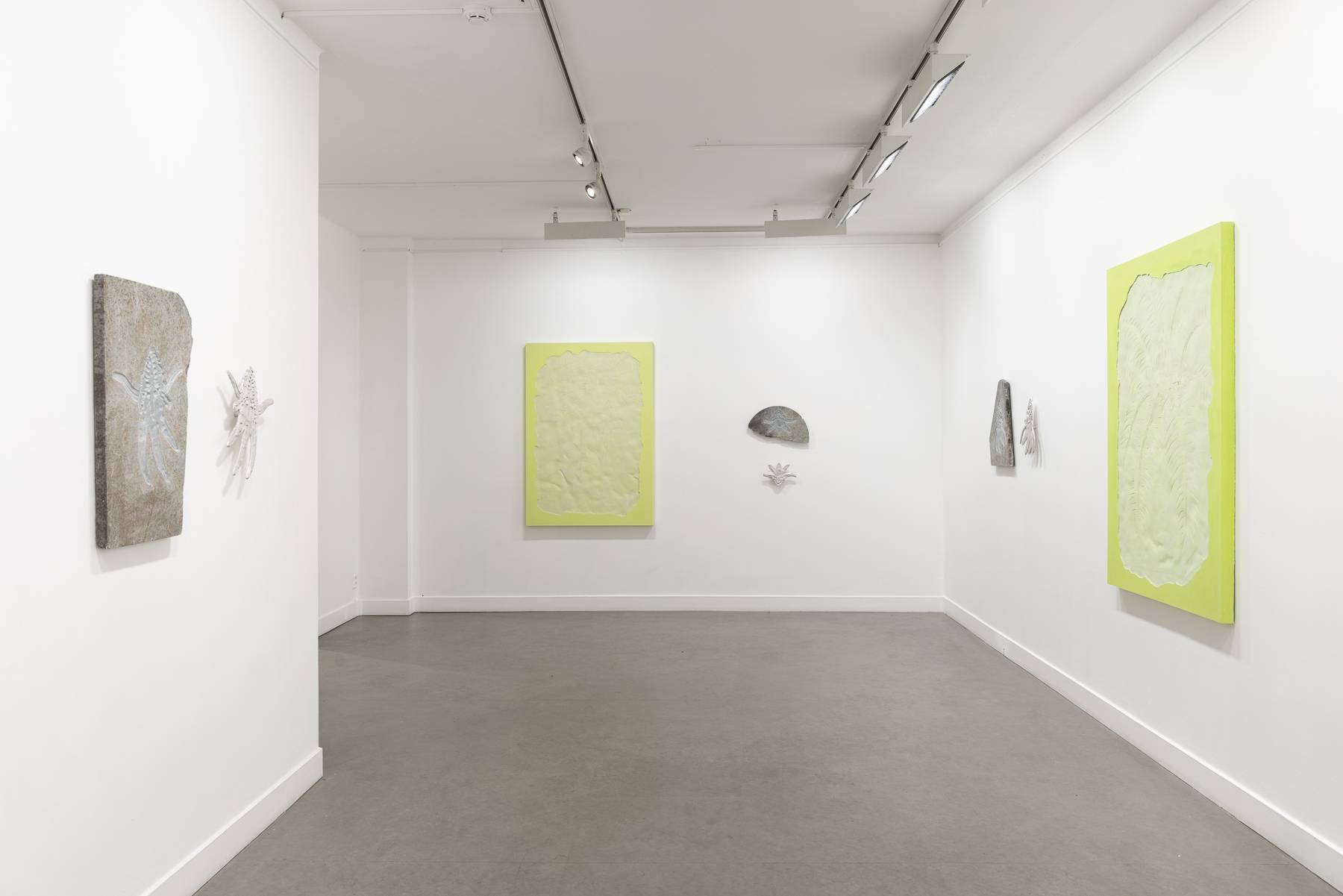
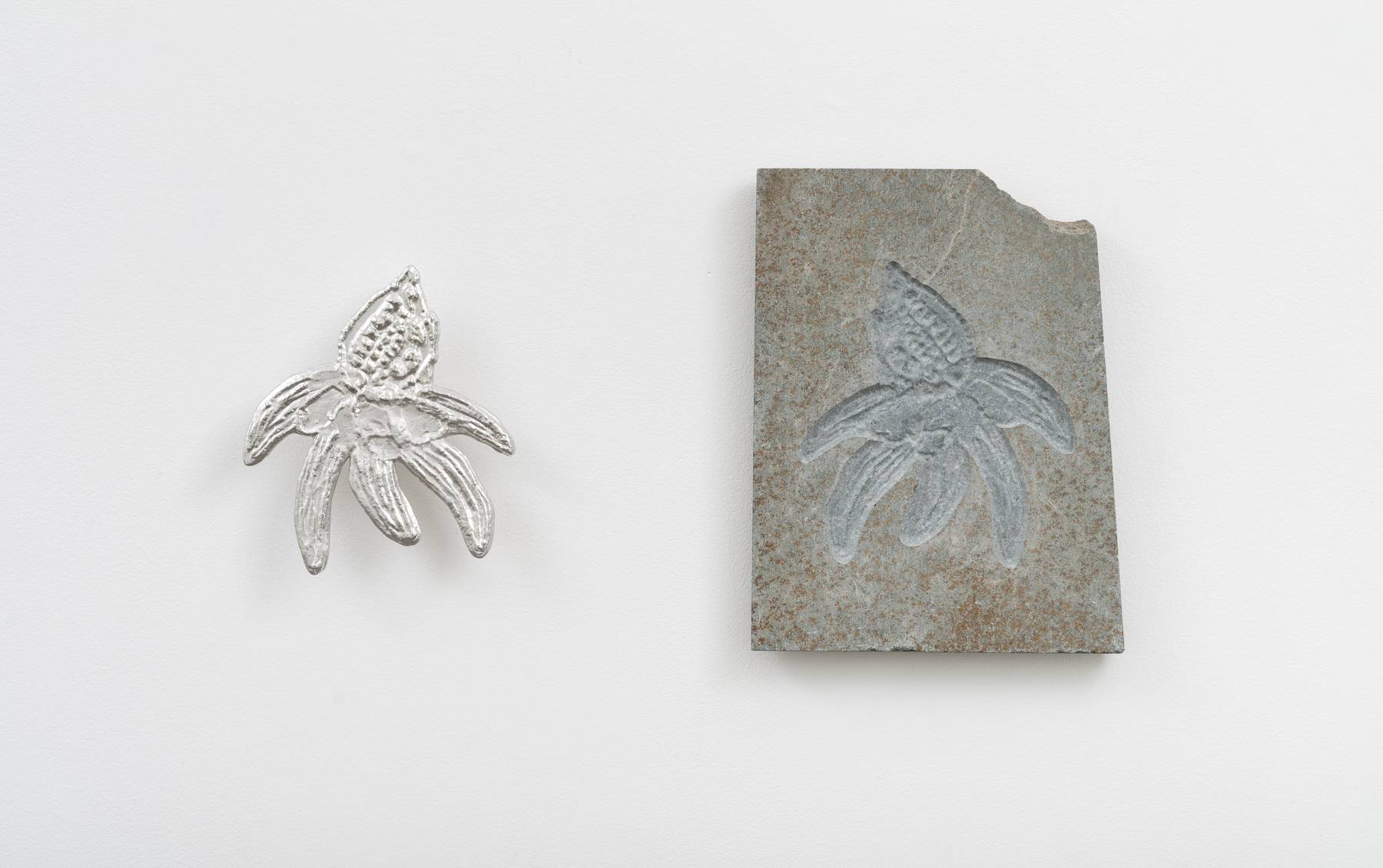
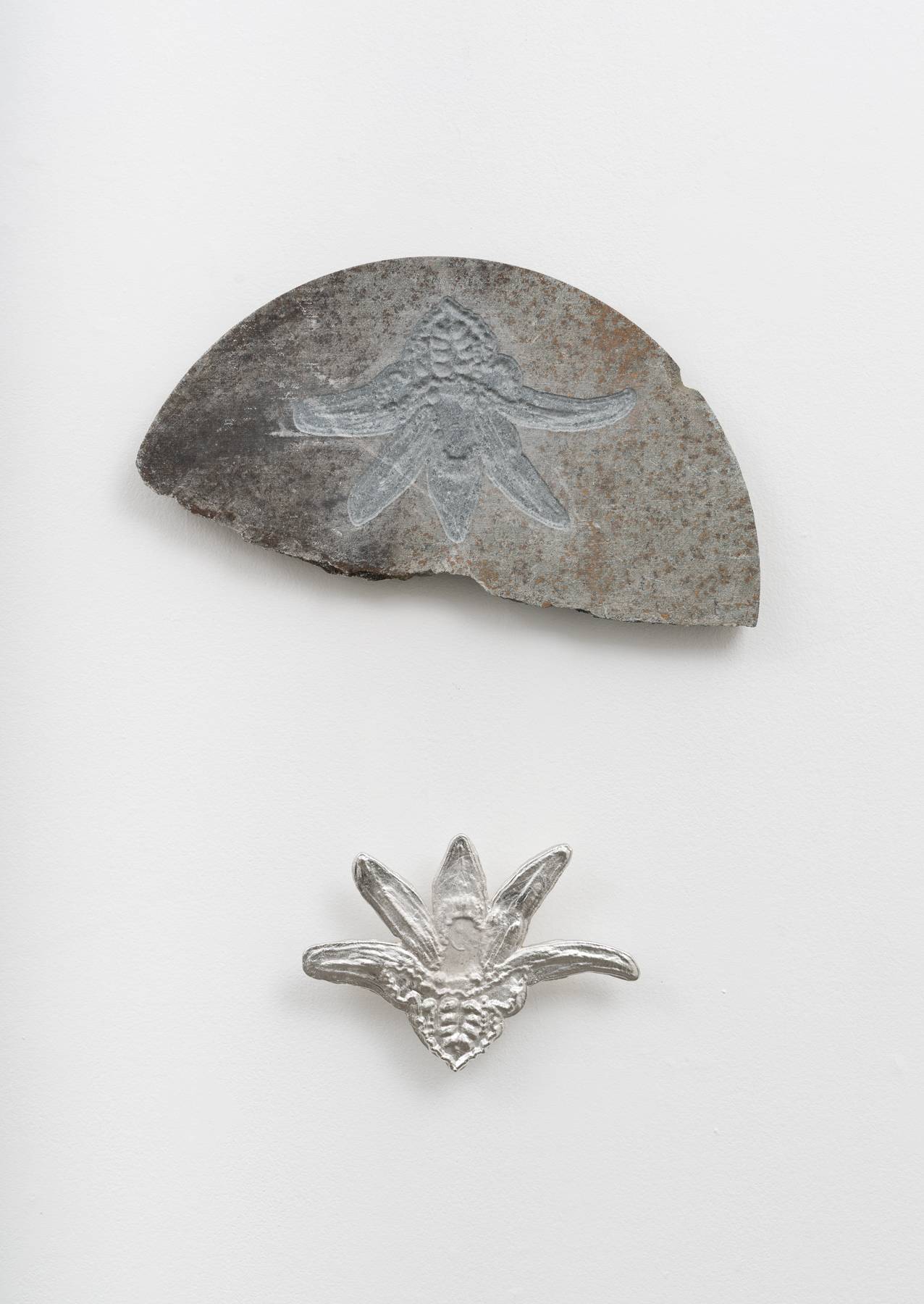
The series Huldras døtre (‘The Daughters of Huldra’) is developed from watercolor studies in which the artist has re-interpreted the rare ghost orchid (in Norwegian “huldreblom”). The altered motifs are engraved as reliefs in soapstone and cast in pewter, two materials culturally dating back to the Bronze Age. The ghost orchid lacks chlorophyll and is therefore not dependent on photosynthesis to transform energy. This allows the orchid to grow in the shaded depths of forests. It is extremely rare and unpredictable; it may bloom in one place and then suddenly appear elsewhere. Visible, and then invisible. In Norwegian folklore, the Hulder is an ambiguous nature spirit, known to seduce and abduct, but also for rewarding those who respect nature. The Huldra lives underground, between the visible and the hidden.
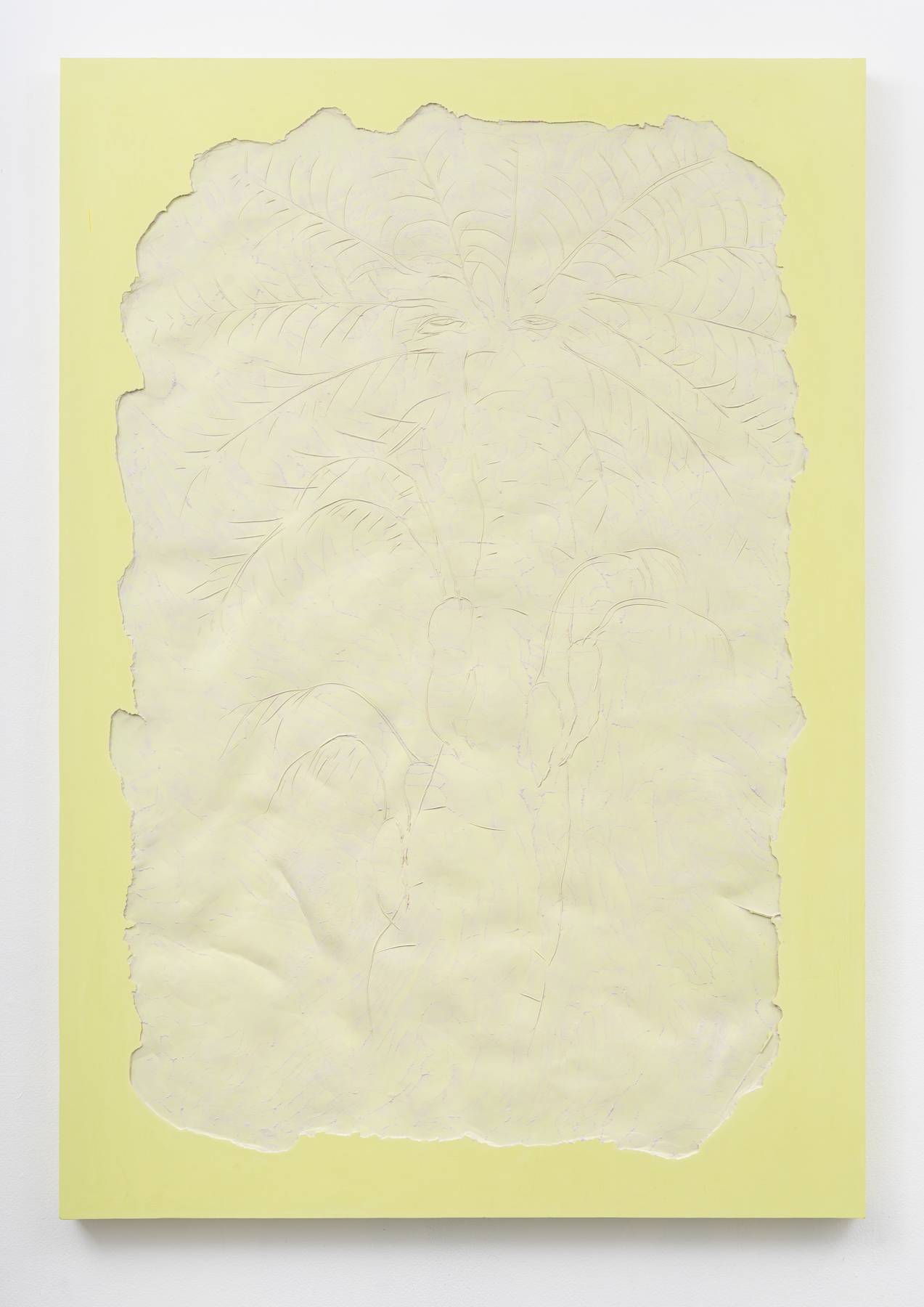
The series Karbonvokteren (The Carbon Keeper) consists of three cast reliefs. The motifs are based on sketches of “living fossils”—prehistoric plants in the Botanical Garden with a mythological character, as well as illustrations of swamp forests from the geological Carboniferous period. These are drawn into clay which is cast in composite plaster, a material that transitions from liquid to solid. The works explore how carbon affects humans through both a short and a long cycle; the life-sustaining, fast process of photosynthesis and the slow carbon cycle in which decomposed plant matter over millions of years is transformed into coal and what we today exploit as fossil fuels.
Sofia Eliasson (b. 1981) is a visual artist with an MFA from the Art Academy – Department of Contemporary Art at the University of Bergen. She works with sculpture, painting and installation at the intersection of nature, materiality, and storytelling. Eliasson has exhibited widely in Norway and Sweden, with exhibitions at The Norwegian Sculptors' Association, Oslo (2019), Bryne Kunstforening (2024) og KRAFT, Bergen (2023), among others. She has also participated in numerous group exhibitions, including Østlandsutstillingen (2022 and 2023) and the Autumn Exhibition (2019). She has recieved several public grants and project funding, and undertakes commissions for public spaces.
The exhibition supported by Arts Council Norway and the Norwegian Visual Artists' Fund (BKV).
From Breath to Matter
In Sofia Eliasson’s exhibition ”Shared Breath” we are invited to encounter the elusive existence of the rare, wild ghost orchid (in Norwegian “Huldreblom”). Orchids have been a recurring motive in Eliasson's work in recent years, all of them rare and threatened by climate change and industrial forestry due to the extremely specific conditions they demand for thriving. Because of its elusiveness and unpredictability, our knowledge of its ways and life is scarce. It dwells in the depth and shade of old-growth forests, appears at one spot one year and then is gone for ten years until the next time, or it may never show itself there again but suddenly appear in another location. It blooms only for a short time and withers quickly, leaving no trace of its existence. Unlike the majority of plants it doesn’t need sunlight, instead it feeds on nutrients from the fungi underground and its mycorrhizal network. And so the ghost orchid bypasses photosynthesis - the process by which green plants transform light energy into chemical energy by converting water, carbon dioxide, and minerals into oxygen. One could say that the ghost orchid has found a way to escape the reciprocal process that sustains life on earth, enabling it to grow and flourish in the dark.
In our time of capitalism’s ever deepening crisis and climate destruction, all kinds of reciprocal webs and systems are torn. As is our sense of temporality, not just because of an ever escalating acceleration of events and information, but also in the face of a future that seems impossible to imagine, despite – or maybe because of - all the research data that tells us what we might expect. And so we might say that we, lit up by a mass of information, are moving towards a future in the dark.
The ghost orchid has found a way to not engage in photosynthesis, but humans are fundamentally dependent on it. We would not outlive a single day without plants. And yet plants have been conceptualized as occupying a place that is barely above the inanimate world, and thus freely exploitable by economic interests. Reciprocity and exploitation are incompatible practices – in order to exploit something you have to distance yourself from it. And yet we are fundamentally intertwined with the living world surrounding us, the distinction between us and plants being more porous than we might think. Above all, we’re both part of the fundamental exchange and transformation from breath to matter, from matter to breath.
This reciprocal weave, where breath and air coalesce our different life forms, plant and human, is exhausted by the amount of carbon dioxide produced by our current capitalist system. In a dark twist, the plants of our time sustain us, but the plants of prehistoric time might destroy us. During the Carbon era, or, the Carboniferous period, which lasted from about 359 million to 299 million years ago the atmosphere was substantially more rich in oxygen than today. Plants were gigantic due to the warm and humid climate, and as they photosynthesized, they absorbed significant amounts of carbon dioxide. This rich flora produced huge amounts of organic matter and played a fundamental role in the formation of vast coal deposits, as dead plant material accumulated in swampy areas and transformed over millions of years into the fossil fuel we are burning today. By extracting it from the depth of the earth, we are releasing an ancient exhale, so extensive and dense that the plants of today cannot inhale it into their process of photosynthesis. We are running out of breath.
In the works of Eliasson, the plants are present in their absence – fossilized, imprinted, a thin carving as if a finger traced it in the earth, a stick drawing in the sand, ephemeral and eternal, a memorial and a metamorphosis at once, as the ghost orchid moves on and continues to elude us.
Written by artist and writer Moa Franzén.